Skej
Assistants
Product
Solutions
For Teams
Switch from Calendly
Pricing
← Back to Blog
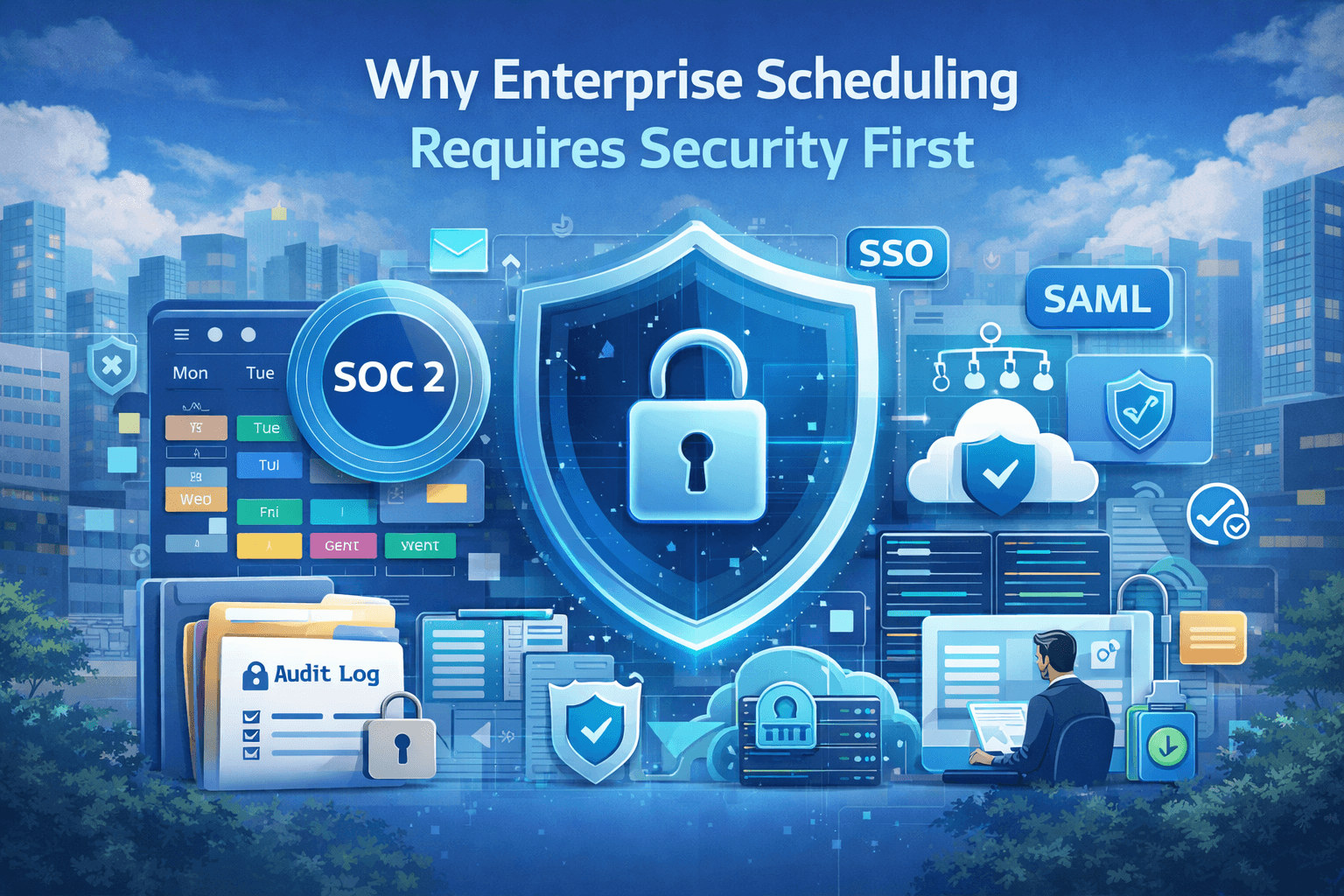
Why Enterprise Scheduling Requires Security First

Why Enterprise Scheduling Requires Security First

Justin Canetti•2026-03-17

Scheduling a meeting seems simple.

Two people find a time, send a calendar invite, and the meeting happens.

But inside large organizations, scheduling is rarely that straightforward. Behind every meeting request is access to sensitive calendar data, employee availability, internal meeting patterns, and sometimes even customer conversations.

That’s why for enterprise teams, scheduling isn’t just a productivity tool. It’s a security decision.

Calendar Data Is More Sensitive Than It Looks

At first glance, a calendar might seem harmless. But calendars often contain some of the most revealing information inside an organization.

They can show:

  • Who is meeting with whom
  • When executives are available or traveling
  • Upcoming product launches
  • Internal project discussions
  • Customer meetings and deal activity

In many cases, simply analyzing calendar patterns can reveal strategic information about a company.

This is why enterprises treat calendar access very carefully. Any tool that interacts with calendars effectively becomes part of the company’s internal infrastructure.

Why Simple Scheduling Tools Don’t Always Work for Enterprise

Many scheduling tools were originally built for individuals or small teams.

For example, booking link tools allow someone to share availability and let others pick a time. These tools are convenient and work well in many situations.

But enterprises quickly run into additional requirements:

  • Centralized admin controls
  • Security and compliance standards
  • User provisioning and deprovisioning
  • Audit logs
  • Data governance
  • Integration with identity systems

Without these capabilities, scheduling software becomes difficult for IT teams to manage at scale.

Identity and Access Management

One of the first things enterprise IT teams look for is how a scheduling platform handles identity.

Most organizations use systems like:

  • SAML
  • Single Sign-On (SSO)
  • Identity providers such as Okta, Azure AD, or Google Workspace

These systems allow IT teams to control which employees can access software and ensure access is removed when someone leaves the company.

For scheduling tools, this is critical because they connect directly to employee calendars.

If identity controls aren’t implemented properly, companies risk leaving access open to sensitive scheduling data.

Security Certifications Matter

Enterprise buyers also look for clear security practices and third-party validation.

The most common requirements include:

  • SOC 2 compliance
  • Encryption for data in transit and at rest
  • Secure infrastructure
  • Documented access controls
  • Security monitoring and incident response

These certifications help organizations verify that a platform meets modern security standards.

Without them, many enterprise IT teams won’t even allow a product to be evaluated.

Multi-Tenant vs Isolated Architectures

Another important factor is how customer data is stored.

Some platforms run entirely in shared multi-tenant environments, while others offer options such as:

  • Single-tenant deployments
  • Isolated infrastructure
  • Dedicated data storage

Larger organizations sometimes require stronger isolation to meet internal policies or regulatory requirements.

This is especially true for industries like finance, healthcare, and large technology companies.

Administrative Visibility

When scheduling happens across hundreds or thousands of employees, administrators need visibility.

Enterprise scheduling tools often include:

  • Admin dashboards
  • Usage monitoring
  • Team management
  • Permission controls
  • Audit logs

These features allow organizations to manage scheduling workflows the same way they manage other enterprise systems.

Scheduling Is Infrastructure

For individuals, scheduling software is a convenience.

For enterprises, it becomes infrastructure.

It sits between email, calendars, employees, and customers. It helps coordinate internal collaboration and external communication.

Because of that, security and governance need to be built into the foundation of the product — not added later as an afterthought.

As organizations continue adopting AI assistants and automated workflows for communication, these security requirements will only become more important.

The future of scheduling will not just be about saving time.

It will be about doing it securely, reliably, and at enterprise scale.

Product

Email AssistantBooking LinkTextingSlack & TeamsFollow-UpsAdd to CalendarSmart Options

Solutions

For InvestorsFor FoundersFor SalesFor RecruitersSwitch from Calendly

For Teams

Internal MeetingsSlack & TeamsSecurity & ComplianceIT Admin ControlsCustom Assistants

Company

CompanyUpdatesBlogSimon BaumerContact

Resources

PricingFAQTermsPrivacyCookiesTrust Center

Get Started

Product

Email AssistantBooking LinkTextingSlack & TeamsFollow-UpsAdd to CalendarSmart Options

Solutions

For InvestorsFor FoundersFor SalesFor RecruitersSwitch from Calendly

For Teams

Internal MeetingsSlack & TeamsSecurity & ComplianceIT Admin ControlsCustom Assistants

Company

CompanyUpdatesBlogSimon BaumerContact

Resources

PricingFAQTermsPrivacyCookiesTrust Center

Get Started

Designed by 3Gen Internet Corporation in New York

Skej
Assistants
Product
Solutions
For Teams
Switch from Calendly
Pricing
← Back to Blog
Why Enterprise Scheduling Requires Security First

Why Enterprise Scheduling Requires Security First

Justin Canetti•2026-03-17

Scheduling a meeting seems simple.

Two people find a time, send a calendar invite, and the meeting happens.

But inside large organizations, scheduling is rarely that straightforward. Behind every meeting request is access to sensitive calendar data, employee availability, internal meeting patterns, and sometimes even customer conversations.

That’s why for enterprise teams, scheduling isn’t just a productivity tool. It’s a security decision.

Calendar Data Is More Sensitive Than It Looks

At first glance, a calendar might seem harmless. But calendars often contain some of the most revealing information inside an organization.

They can show:

  • Who is meeting with whom
  • When executives are available or traveling
  • Upcoming product launches
  • Internal project discussions
  • Customer meetings and deal activity

In many cases, simply analyzing calendar patterns can reveal strategic information about a company.

This is why enterprises treat calendar access very carefully. Any tool that interacts with calendars effectively becomes part of the company’s internal infrastructure.

Why Simple Scheduling Tools Don’t Always Work for Enterprise

Many scheduling tools were originally built for individuals or small teams.

For example, booking link tools allow someone to share availability and let others pick a time. These tools are convenient and work well in many situations.

But enterprises quickly run into additional requirements:

  • Centralized admin controls
  • Security and compliance standards
  • User provisioning and deprovisioning
  • Audit logs
  • Data governance
  • Integration with identity systems

Without these capabilities, scheduling software becomes difficult for IT teams to manage at scale.

Identity and Access Management

One of the first things enterprise IT teams look for is how a scheduling platform handles identity.

Most organizations use systems like:

  • SAML
  • Single Sign-On (SSO)
  • Identity providers such as Okta, Azure AD, or Google Workspace

These systems allow IT teams to control which employees can access software and ensure access is removed when someone leaves the company.

For scheduling tools, this is critical because they connect directly to employee calendars.

If identity controls aren’t implemented properly, companies risk leaving access open to sensitive scheduling data.

Security Certifications Matter

Enterprise buyers also look for clear security practices and third-party validation.

The most common requirements include:

  • SOC 2 compliance
  • Encryption for data in transit and at rest
  • Secure infrastructure
  • Documented access controls
  • Security monitoring and incident response

These certifications help organizations verify that a platform meets modern security standards.

Without them, many enterprise IT teams won’t even allow a product to be evaluated.

Multi-Tenant vs Isolated Architectures

Another important factor is how customer data is stored.

Some platforms run entirely in shared multi-tenant environments, while others offer options such as:

  • Single-tenant deployments
  • Isolated infrastructure
  • Dedicated data storage

Larger organizations sometimes require stronger isolation to meet internal policies or regulatory requirements.

This is especially true for industries like finance, healthcare, and large technology companies.

Administrative Visibility

When scheduling happens across hundreds or thousands of employees, administrators need visibility.

Enterprise scheduling tools often include:

  • Admin dashboards
  • Usage monitoring
  • Team management
  • Permission controls
  • Audit logs

These features allow organizations to manage scheduling workflows the same way they manage other enterprise systems.

Scheduling Is Infrastructure

For individuals, scheduling software is a convenience.

For enterprises, it becomes infrastructure.

It sits between email, calendars, employees, and customers. It helps coordinate internal collaboration and external communication.

Because of that, security and governance need to be built into the foundation of the product — not added later as an afterthought.

As organizations continue adopting AI assistants and automated workflows for communication, these security requirements will only become more important.

The future of scheduling will not just be about saving time.

It will be about doing it securely, reliably, and at enterprise scale.

Product

Email AssistantBooking LinkTextingSlack & TeamsFollow-UpsAdd to CalendarSmart Options

Solutions

For InvestorsFor FoundersFor SalesFor RecruitersSwitch from Calendly

For Teams

Internal MeetingsSlack & TeamsSecurity & ComplianceIT Admin ControlsCustom Assistants

Company

CompanyUpdatesBlogSimon BaumerContact

Resources

PricingFAQTermsPrivacyCookiesTrust Center

Get Started

Product

Email AssistantBooking LinkTextingSlack & TeamsFollow-UpsAdd to CalendarSmart Options

Solutions

For InvestorsFor FoundersFor SalesFor RecruitersSwitch from Calendly

For Teams

Internal MeetingsSlack & TeamsSecurity & ComplianceIT Admin ControlsCustom Assistants

Company

CompanyUpdatesBlogSimon BaumerContact

Resources

PricingFAQTermsPrivacyCookiesTrust Center

Get Started

Designed by 3Gen Internet Corporation in New York